Rest In Power, Marjane
This week in BehanVox: flawed family planning policies, fudged Census data, tennis tantrums, and more

Our weekly newsletter brings you our top stories, gender news from the world, and our team’s reading recommendations.

Hello and welcome to BehanVox!
The passing of Marjane Satrapi this week cast a pall of gloom over the literary world. When it appeared in 2000, Iran-born Marjane’s Persepolis was a revelation. Told through the eyes of a 10-year-old, and set in the tumultuous era of the Islamic revolution in Iran, it brought to us, in vivid black and white visuals and moving words, the story of how religious extremism was to change an entire society, particularly the lives of its women. Last year, she refused the Legion of Honour, to protest France’s – and the West’s – “hypocritical attitude” toward Iran. Rest in power, Marjane!
This week, we have an investigative report that delves into the senselessness of implementing an outdated family planning campaign in a community that is fast disappearing. And the story of a women farmers’ collective that is changing how rural communities live and work in Uttarakhand.

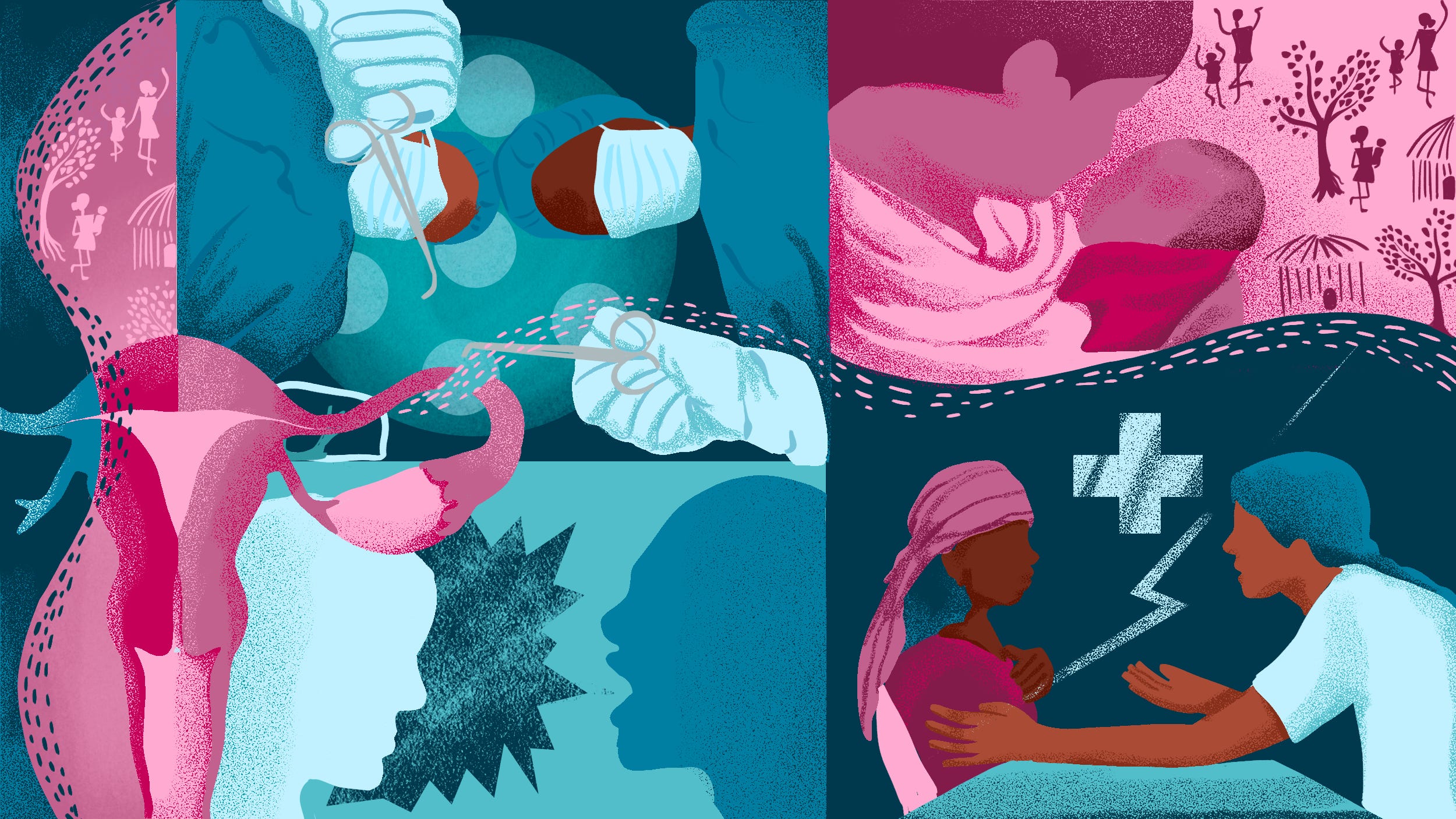
There was a time when the government’s obsessive concerns around Malthusian population concerns were visible in public spaces around India. The ‘lal trikon (red triangle)’ of the Family Planning campaign, the snappy hum do hamare do slogan and Nirodh, the public sector produced condom – these were visible just about everywhere, at bus stops, hoardings, newspaper ads, promos during movies. Your big family size, the campaigns implied, was a headache for a young country trying to beat back poverty, hunger and stagnation. Your duty as a citizen thus lay in keeping it small.
A lot of this has changed over the decades. We now know that historical inequalities of class and caste also are a drag on development. The excesses of Emergency and its forced male sterilisations, the terrible tragedies of the botched mass sterilisation campaigns for women all forced us to rethink the state’s right to issue population diktats.
Now that fertility rates are declining across the south, what happens to marginalised tribal populations who are confronted with declining population numbers that are still being held to the hum do hamare do standard?
An intensely investigated story this week in BehanBox by Nithya Pandian tells the story of such a community – the Adi Kurumbas of Nilgiris, a particularly vulnerable tribal group. Among the stories Nithya explores is of Karthika*, 26-year-old from the community who had been admitted to the government hospital in Ooty to deliver her second baby in 2021. She alleges that she was put through a tubectomy without her consent. “They did not discuss this with me, or my husband, or my in-laws. After the C-Section, they conducted a sterilisation procedure. We came to know about it only two days later,” she recalls. When confronted later, doctors and nurses refused to tell her why she had not been informed.
The women interviewed spoke of discourteous, peremptory and condescending behaviour on part of the health professionals. It may not be coercion of the Emergency era but the women said they were not counselled or told about their contraceptive options, as guidelines now require. They also said that this emphasis on sterilisation after two children has imperilled their community which is already dealing with a declining population. Official surveys have shown that the number of Alu Kurumbas has been falling steadily. And an aggressive population control push could lead to their erasure.
Read our story here.
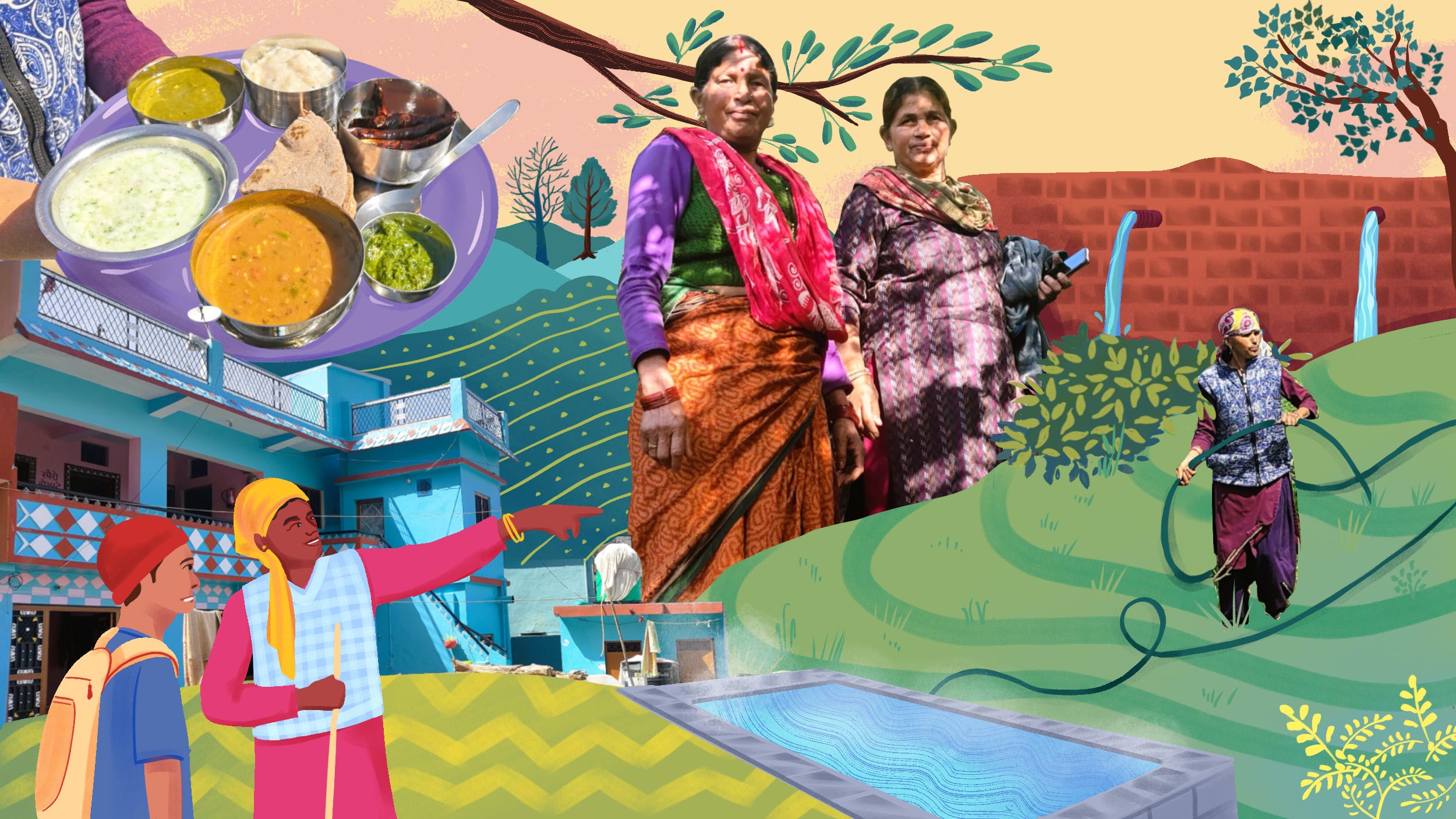
Vimla Pundeer, 56, owns a two room homestay in Silkoti village in Chamba block facing the Himalayas. Her orchard and vegetable farm are full of lemons, plums, peaches and apples, peas and spinach. Together, they offer travellers an experience of Garhwali hospitality and food. There are 25 other such homestays across Chamba run by women who are part of a farmers producers organisation, Him Vikas.
Villages such as Silkoti in Chamba had been on the brink of an ecological and agricultural crisis around 2010. Rains had turned sporadic, snowfall became sparse, and for several reasons, the springs that feed entire Himalayan villages had dried up. The farm and orchard yield declined and there was massive migration to cities. Traditional methods of farming and living suddenly looked unviable.
This is when women decided to collectivise as self help groups and form an FPO under the project, Himmotthan. They understood how to use alternative farming techniques, processing methods and markets. They learnt how to revive springs by clearing out trenches. In five years, changes began to become clear in their lives and livelihoods.
It returned hours to the women’s days, time that was earlier spent lugging buckets and pots of water several times in a day down from the springs to feed the family, farms and livestock. With that time they learnt how to run homestays and become guides on the lovely nature trails that crisscross the area.
“I have seen three worlds in my life. After marriage, my days were spent with buffaloes, cows and goats. Then came the years of raising children, sending them to school and cooking on firewood. And now this life, where I host guests and show them our village,” says Vimla. “Now I have both gas and a wood stove. I cook our Garhwali cuisine for visitors, and they like it very much.”
Read our story here.


Census and Consensus: Census enumerators say they have been asked by senior officials to revisit household and “correct” data discrepancies that become apparent when government records are compared to their own findings, according to a report in The Hindu. These relate to issues such open defecation and household access to LPG and electricity, according to the report. Enumerators have also alleged that they have been asked not to ‘select options that may show the government in poor light’, adds the report.
Sterilisations: The onus of family planning still sits overwhelmingly on women, says the latest National Family Health Survey-6 cited by The Times of India. Female sterilisations stood at 36.5% and male at 0.5%; in the last survey these numbers were 37.9% for women and 0.3% for men. The survey also revealed that married women (15-49 years) were participating in household decision making in larger numbers in rural and urban areas at 88% and 91.4%, respectively. However, an analysis by Newsminute has concluded that the survey has omitted critical indicators – down to 101 from 131 in the last survey – relating to anaemia, sex ratio at birth, infant and child mortality and quality of family planning services.
Tennis Tantrum: After he lost a game to a French teen, Moise Kouame, Paraguayan tennis player Adolfo Vallejo attributed his loss to the woman who umpired the game, Ana Carvalho. He blamed her for being unable to control the home crowds at the French Open, insisting that a high pressure game environment “has to be refereed by a man”. He has been fined $65,000 for his remark.
Timeless Tracks: She never quite got the fame she deserved in Bollywood but Suman Kalyanpur, who passed away this week aged 89, had a fiercely loyal fanhood of her own. Many of her songs became anthems in their own right – for an entire generation, Mere mehboob na jaa was the eternal song of the ghost in white, Aaj kal tere mere pyaar ke charche the tune to shimmy to, and of course, Na tum humme jaano the soundtrack of heartache. Some of her loveliest songs were duets with Mohammed Rafi who for a while had stopped singing with Lata Mangeshkar over professional differences. Those swoony love duets still work magic – Thehariye hosh mein aa loon or Baad muddat ke yeh ghadi. With her, an entire generation of Hindi film playback singers has now left us.


As you step into the weekend, let us recommend some fun, witty as well some sobering reading and listening.
Many Worlds: Ayşegül Savaş is one of the few writers who holds on her page, with great care, relationships and modernity. Her new story centres the lives of a young expat couple, Defne and Mete; there is intellectual companionship, academic disenchantment, and class relations. The writing, with its signature deceptive ease, holds a mirror to the self and its fragmentation when faced with conflicting choices. It is both a lament and ode to the ineffable, impossible desire to hold space for many versions and inhabit many realities, simultaneously.
Marjane Satrapi: “Today, the description of the world is always reduced to yes or no, black or white. Superficial stories. Superhero stories. One side is the good one. The other one is evil. But I’m not a moral lesson giver. It’s not for me to say what is right or wrong. I describe situations as honestly as possible. The way I saw it. That’s why I use my own life as material. I have seen these things myself, and now I’m telling it to you. Because the world is not about Batman and Robin fighting the Joker; things are more complicated than that. And nothing is scarier than the people who try to find easy answers to complicated questions.” Here is an old interview with Marjane Satrapi that is an essential reminder of truth, power and justice.
Welcome, Valued Employee: Here is something fun for the weekend. The Wired took all of its reportage on AI and designed this beautiful game, which will help you think while you chuckle. Our favourite small print: *Compliance does not guarantee your nonredundancy. Read this along with The Pope’s Encyclical Maginifica Humanitas.

Want to explore more newsletters? In Postcards, we send you missives on the places, people and ideas that brought Team BehanBox joy. Our monthly offering Postscript invites you, the reader, into our newsroom to understand how the stories you read came to be – from ideation to execution. Subscribe for more.